Why the Scotts Flat Spillway Must Be Replaced
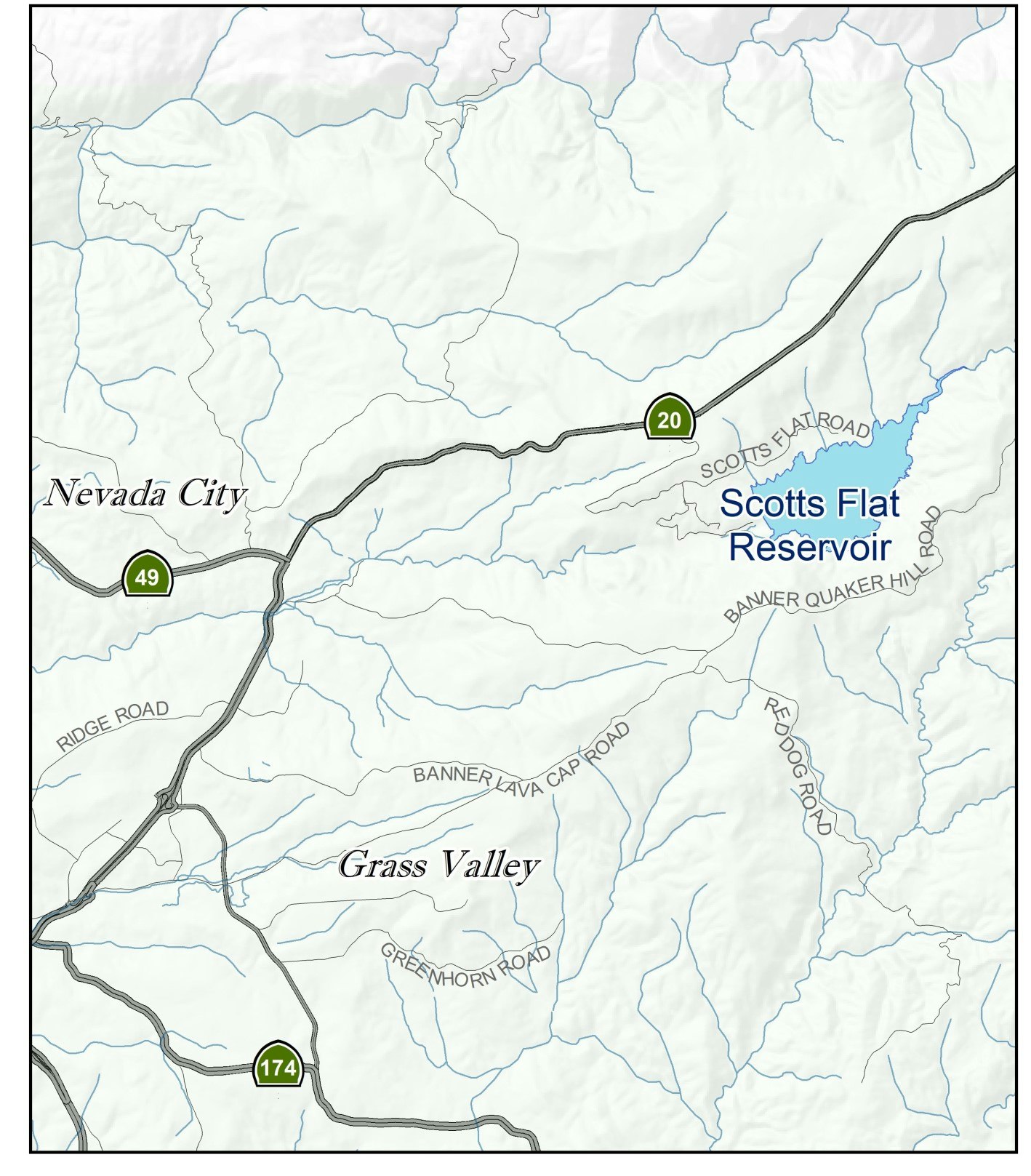
Scotts Flat Reservoir is a critical resource for the region. It provides drinking and irrigation water, supports recreation and tourism, sustains wildlife habitat, and contributes to the local economy. Located at a 3,000-foot elevation, it has a capacity of 49,000 acre-feet of water. It also generates clean energy, with the Scotts Flat Hydropower Plant producing about 875 kilowatts of electricity.
Because of its importance, maintaining the safety and reliability of Scotts Flat Dam is essential.
Understanding the Risk
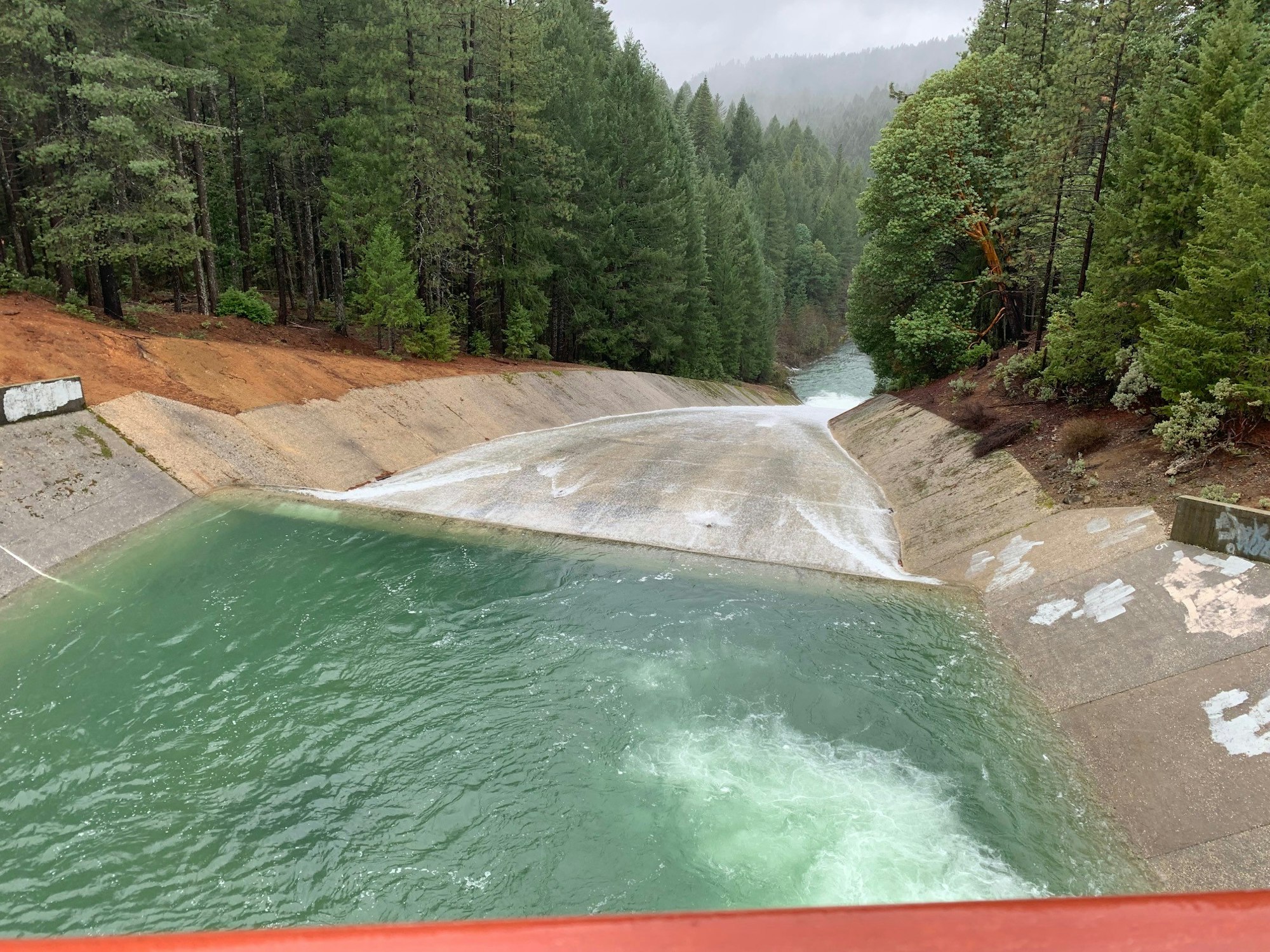
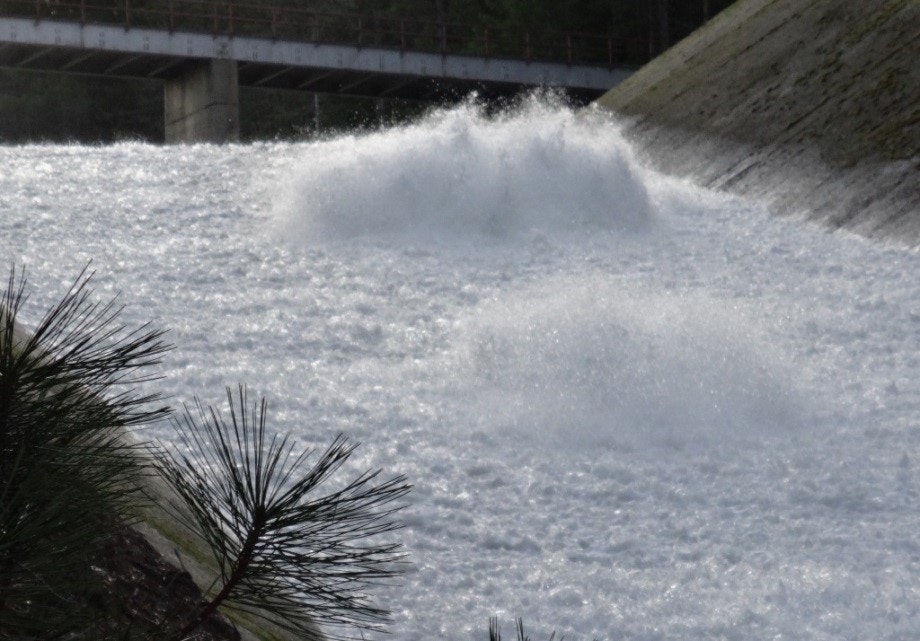
The spillway is one of the most important safety features of the dam. Its job is to safely release excess water during storms and high runoff events, protecting the dam itself from erosion and potential failure.
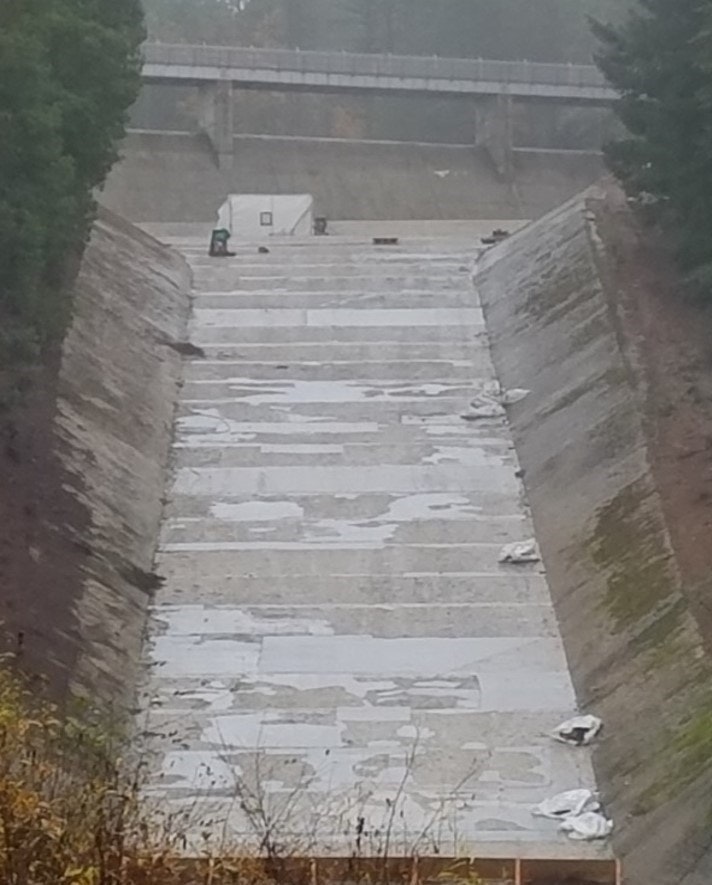
The existing spillway, built in the 1950s, is deteriorating. Over time, the concrete has developed significant damage, including repeated spalling. While repairs have been made, the structure is aging and no longer meets modern safety expectations.
If the spillway were to fail during a major storm event, it could compromise the dam. Scotts Flat Dam is classified as a high-hazard facility, meaning a failure could result in loss of life and significant downstream impacts.
The risk is especially important because:
- Scotts Flat Reservoir is the primary mid-elevation water supply for Nevada County
- It serves as a key source of drinking and irrigation water for District customers
- It is located near the communities of Nevada City, Grass Valley, and surrounding rural neighborhoods
Replacing the spillway is necessary to protect public safety, ensure reliable water supply, and safeguard nearby communities—including disadvantaged areas that could be disproportionately affected by infrastructure failure.
Why Replacement Is the Right Solution
NID has invested in maintaining the existing spillway, including:
- Over $540,000 in major repairs in 2017
- More than $2.8 million between 2018 and 2025 for engineering studies, modeling, and design
However, ongoing repairs are no longer a cost-effective or reliable long-term solution. State and federal regulators—including the California Division of Safety of Dams (DSOD) and the Federal Energy Regulatory Commission (FERC)—require that the spillway be replaced to meet current safety standards.
A Necessary Investment in Safety and Reliability
The spillway replacement project is expected to begin construction in 2026 and take approximately three years to complete, with an estimated cost of up to $55 million.
NID is actively pursuing federal funding and grant opportunities to reduce the financial impact on customers. Even with outside funding, a portion of the cost will need to be supported through water rates.
About Scotts Flat Dam
Scotts Flat Dam is located on Deer Creek in Nevada County, about five miles east of Nevada City. The dam is an earth- and rock-fill structure originally built in 1949 and raised in 1964.
Owned and operated by the Nevada Irrigation District, the facility serves multiple purposes, including water supply, recreation, and hydropower generation. It is regulated under the Federal Energy Regulatory Commission as part of Project No. 5930.