
Record heat devastates NID snowpack ahead of peak season
Only 15 percent of snowpack measured
(GRASS VALLEY, CA., March 31, 2026) -- Historic heat has sharply reduced snowpack across the Nevada Irrigation District (NID), with just 15 percent of average measured during the District’s April snow survey.
Snowpack typically reaches its seasonal peak in late March or early April. This year, however, levels are critically low, raising concerns about increased wildfire risk and reduced water availability in the future.
“Extremely warm and dry conditions in March have significantly reduced the snowpack,” said NID Water Resources Superintendent Thor Larsen. “This is the second-lowest snowpack recorded for an April survey, with 2015 remaining the lowest year on record.”
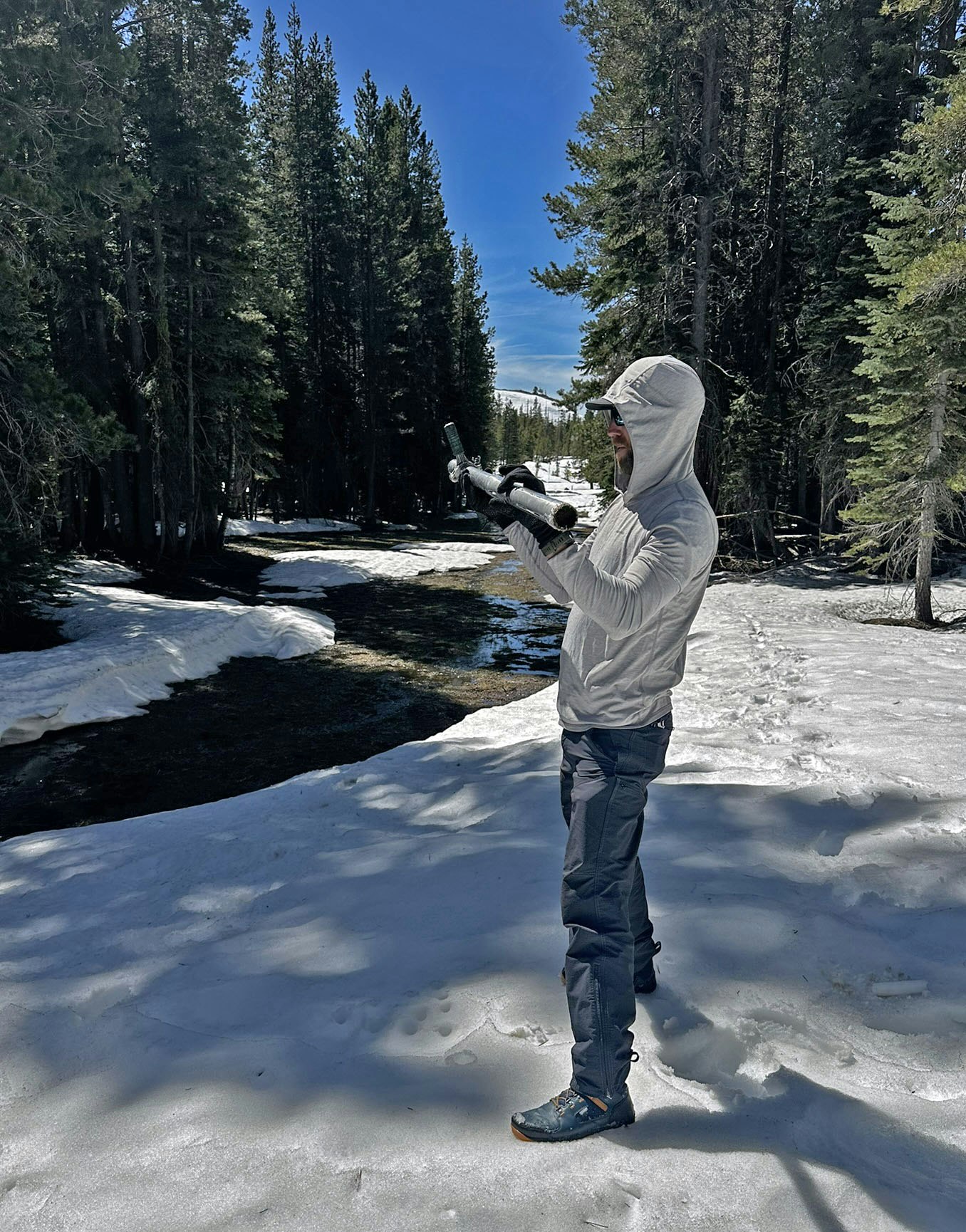
NID hydrologists conducted the survey on March 26, measuring conditions at five established snow courses. The historic average snow water content across these sites is 33.6 inches; this year, the average measured just 4.9 inches.
A February storm briefly improved conditions, bringing snowpack to 65 percent of average by the end of the month. However, an unprecedented March heat wave combined with a complete lack of precipitation quickly erased those gains.
Notably, total precipitation this winter was near or above average. Bowman Reservoir, for example, received 57.58 inches of precipitation (101 percent of average). However, due to consistently warm temperatures, most of that precipitation fell as rain. Or, when it did fall as snow, it melted quickly. As a result, Bowman currently has just 3.6 inches of snow with a water content of only 1.5 inches.
NID’s water supply originates as snowmelt from approximately 70,000 acres of high-elevation watershed near the headwaters of the Yuba River, Bear River, and Deer Creek. Snowpack functions as a natural reservoir, storing winter precipitation and gradually releasing it through the spring and summer. It is an essential process for replenishing rivers, reservoirs, and customer water supplies.
The April 1 survey traditionally provides the most accurate snapshot of peak snowpack and serves as a key indicator for forecasting summer water availability.
Measurements from March 26, 2026:
- Webber Peak (7,800 ft): 24.8" snow depth, 11.3" water content
- English Mountain (7,100 ft): 9.7" snow, 4.2" water content
- Webber Lake (7,000 ft): 14.7" snow, 5.8" water content
- Findley Peak (6,500 ft): 4.5" snow, 1.9" water content
- Bowman Reservoir (5,650 ft): 3.6" snow, 1.5" water content
- Chalk Bluff (4,850 ft, Deer Creek watershed): 0" snow, 0" water content (not included in District average)
Snow water equivalent, the amount of water contained within the snowpack, is a key metric used by water managers to forecast seasonal supply.
While this winter’s precipitation failed to build the snowpack NID depends on for the dry season, it did help replenish reservoirs. As of March 25, total storage stood at 117 percent of average, with reservoirs at 96 percent of capacity, holding 259,867 acre-feet of water.
“All District reservoirs are full or near full as we approach irrigation season starting April 15,” Larsen said. During irrigation season, water deliveries flow through about 500 miles of canals to support agricultural use and pasture irrigation.
Water supplies are expected to meet demand this summer; however, the lack of typical snowmelt runoff in April and May will limit the system’s ability to recharge.
“While storage remains high, without normal snowpack runoff this spring, we anticipate lower carryover storage at the end of the year,” Larsen said. “Although there are no current water shortage restrictions in place, NID strongly encourages conservation from all water users.”
